A Look At What The Earth Is Actually Made Of

The Earth is an incredible place that features many hidden wonders. Slowly but surely, we're learning more about what our planet has to teach us and getting to grips with things that were once a mystery. That includes what sits at the Earth's center, which was widely discussed for centuries without anyone ever reaching any clear conclusions.
As much as we would love to be able to go down to the planet's center and see what's there for ourselves, this simply isn't possible. However, even with such limitations in place, scientists have still been able to improve our understanding of this part of the globe with great precision. So, what is down there exactly?
The Earth's crust stretches for miles but amounts to little of the planet
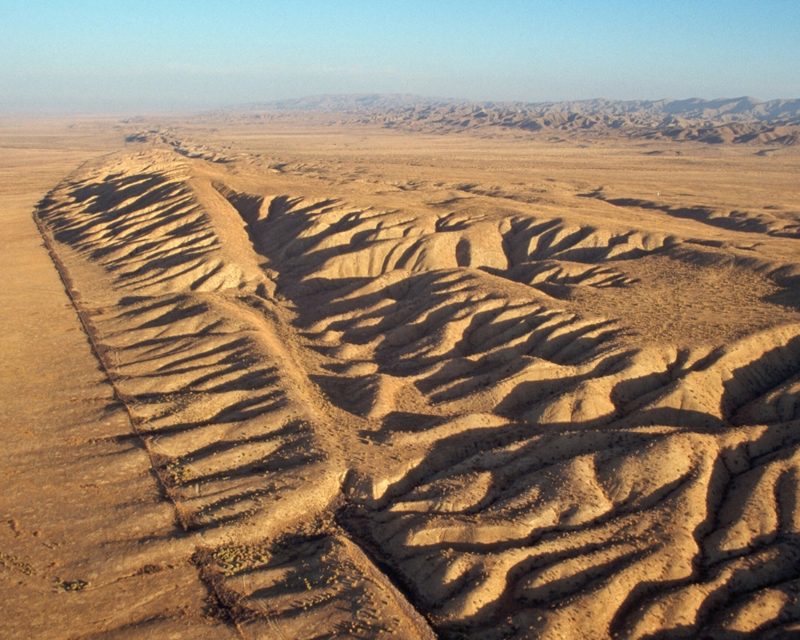
The Earth is essentially formed of three different layers - the crust, the mantle, and the core. These can then be further broken down into smaller layers, such as the upper and lower mantle. The crust is what lies closest to us and varies in thickness, depending on where you are in the world. In some places, it's apparently only three miles deep, while in others, it's around 40 miles. This layer reportedly comprises about 1% of the planet's thickness and protects us from what lies beneath.
The mantle forms the most significant percentage of the Earth's mass
Below the crust is the mantle, which reportedly extends to depths of over 1,800 miles. Much of the Earth's mass comes from this section, which features silicate rocks, magnesium oxide, iron, sodium, calcium, and more. Magma from here is typically what spills out of volcanoes during eruptions, with the various tectonic plates floating on top of this layer. We still have a lot to learn about this part of the planet, with scientists still oblivious to things like how viscous the mantle is or the speed at which it moves. There are also several "blobs" - or large low-shear velocity provinces - here with compositions that elude us. However, with time, we're sure experts will discover the answers.
Our planet's core is reportedly a solid mass surrounded by molten magma
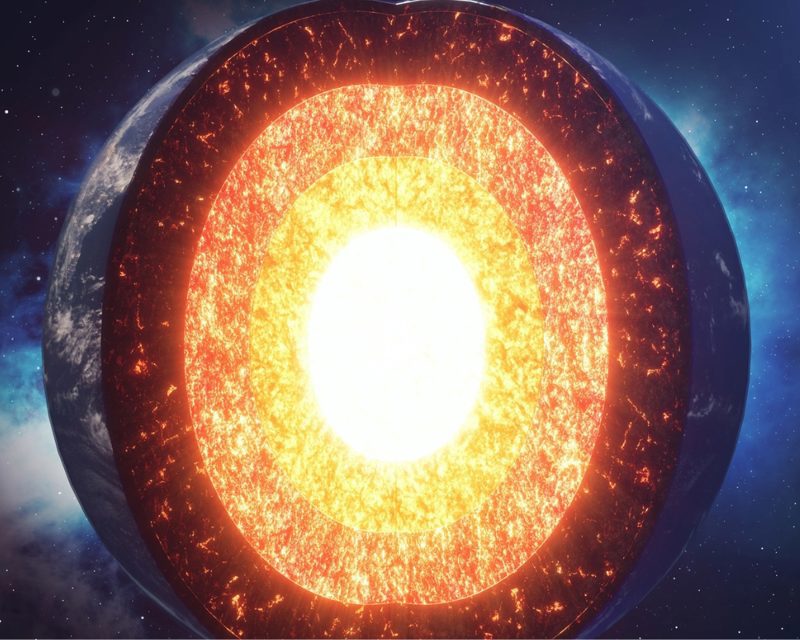
Finally, at the very center of the Earth, you have its core, which is responsible for the planet's magnetic field. We're not sure exactly how hot it is down there, but this mass of iron and nickel could apparently go as high as 10,800 degrees Fahrenheit. The assumption apparently used to be that the core was liquid. However, evidence suggests that it's actually a solid mass, although seismic wave activity indicates that it's likely surrounded by molten magma. Consequently, it's possible that some volcanic eruptions across the globe do release substances that stem from this deep in the Earth.
Given the conditions within the center of the planet, studying what's down there will always come with certain limitations. However, scientists have already done an excellent job of building our understanding of what the Earth is hiding. With more time and greater technological developments, it's possible there may eventually be a day when we know all the secrets lurking beneath our feet.
You May Also Like
 Society
Stories of Choosing a Different Kind of Success
 Careers
The Unexpected Joy of Career Reinvention
 Society
How People Found Community After Moving Abroad