Mind-Blowing Things People Don't Know About Mount Fuji

When it comes to Japanese landmarks, there’s one that probably instantly comes to mind for many people. We’re referring to Mount Fuji, which stands as the country’s highest mountain. At 12,388 feet, it’s not quite the height of Kilimanjaro or Mount Everest, but it still acts as a dominating presence on the horizon.
Over the years, Mount Fuji has really made an impact, from being added to Japanese banknotes in 1950 to becoming a UNESCO World Heritage site in 2013. Considering how long it’s been around, you might think everything there is to know about this mountain is widely recorded. However, there are plenty of mind-blowing things people don’t know about Mount Fuji.
One man has climbed Mount Fuji more than 2,000 times
There’s a great sense of accomplishment that comes from climbing a mountain like Mount Fuji. Plenty of people would seek to scale it once just to say they did it before moving on to another goal. Not Jitsukawa Yoshinobu, though. By 2020, he’d apparently reached the top some 2,060 times, a miraculous achievement given he didn’t start climbing until he was in his 40s. He managed this feat across some 30 plus years, even accomplishing a streak of reaching the summit twice a day for 75 days. This seemingly became a favored activity for the man after he retired.
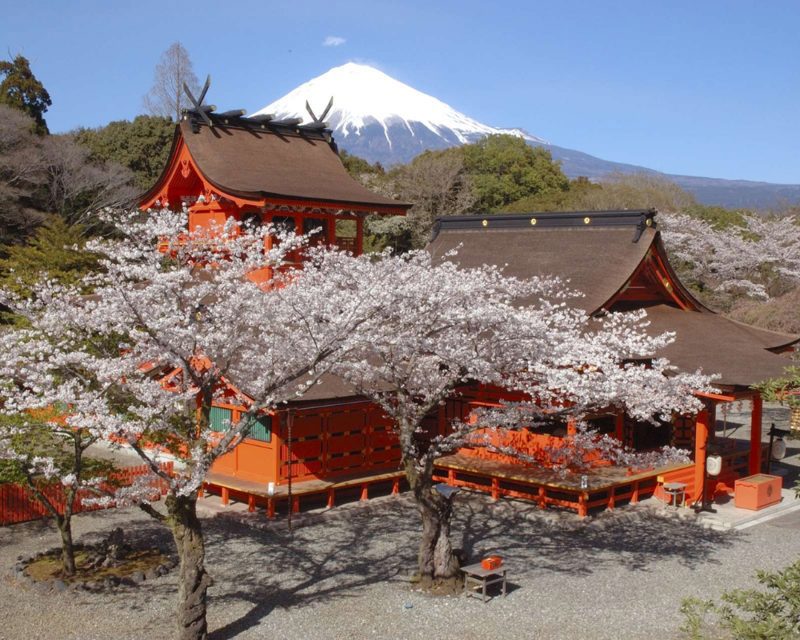
The peak of Mount Fuji belongs to a Shinto shrine
You might think that mountains would be public property. However, it seems that part of Mount Fuji actually belongs to the Shinto shrine, Fujisan Hongū Sengen Taisha. It was donated to the shrine in the early 1600s by Ieyasu Tokugawa, the Tokugawa Shogunate’s founder. Although the shrine was nationalized later that century, a lawsuit against the government many years later reversed that. Unfortunately for them, the shrine can’t actually register the peak of Mount Fuji as private property as it’s unclear what prefecture it falls into. No boundary has ever been established on Mount Fuji, which exists in both the Yamanashi and the Shizuoka prefectures.
Mount Fuji is an active volcano that, thankfully, shows no sign of erupting
Mount Fuji might appear perfectly innocent sitting in the central Honshu region of Japan, but appearances can sometimes be deceiving. While it may not look it, this mountain is actually an active volcano, having last erupted over 300 years ago. While there hasn’t been another incident since then, people worry about what Mount Fuji might do every time an earthquake strikes the country. Thankfully, there’s been no clear indication that an eruption is about to happen, meaning the locals should be perfectly safe. Even if it does erupt, that doesn’t mean there will be lava, as the incident in the 1700s only saw ash rain down over the surrounding area.
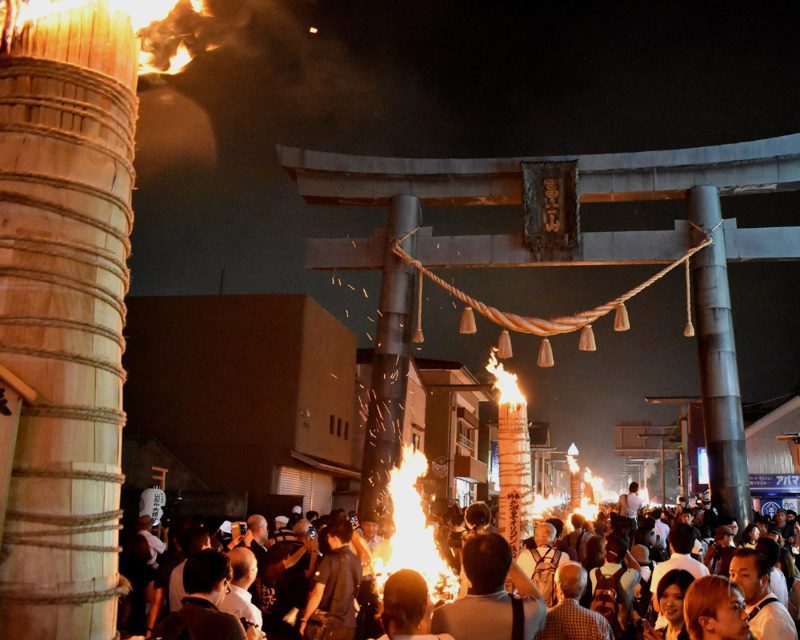
Eruptions are allegedly prevented by the Yoshida Fire Festival every year
You might think the reason Mount Fuji doesn’t erupt is because nothing beneath the Earth’s surface has caused this to happen. However, there is a belief in Japan that the volcano’s calm nature has to do with the Yoshida Fire Festival, where dozens of flaming torches are lit along Fujiyoshida’s main street. People have been doing this at the end of August for hundreds of years, with the practice apparently believed to keep the mountain calm. It’s perhaps no surprise that there are such ideas regarding the volcano, given that Mount Fuji has long been seen as a spiritual landmark in Japan.
Women were originally forbidden from climbing Mount Fuji’s peak
Given that Mount Fuji is considered a place of worship, it’s been subject to some interesting restrictions over the years. That includes the banning of women from climbing its peak until an edict was passed in 1872. This was a common thing across many places of worship in the country, with spots like Mount Omine reportedly still enforcing it. Of course, even when the ban was in place on Mount Fuji, some ignored it. That includes Tatsu Takayama, who became the first woman in recorded history to reach the summit. She did this around 40 years before the edict was passed.
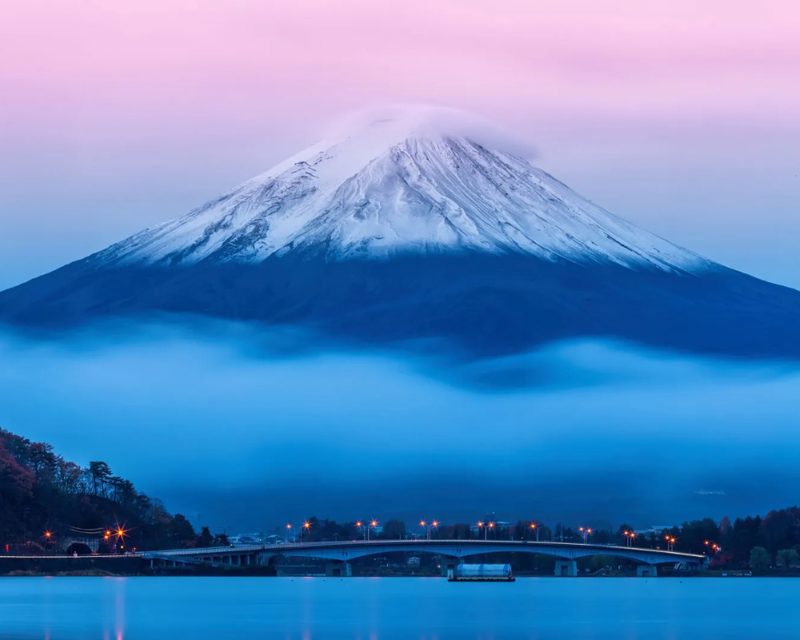
Mount Fuji is actually formed of several peaks that developed thousands of years ago
We think of Mount Fuji as being a single mountain with one peak. However, in reality, it’s actually formed of three peaks, the first of which could be as old as 700,000 years. Komitake and Ashitaka both came together to form the mountain, along with Ko Fuji. The latter is much more recent, believed to be around 100,000 years old, while Ashitaka now sits beneath the southeast foot of the mountain. The volcano that we see today is actually known as Shin Fuji and is even newer than Ko Fuji, likely forming between 8,000 and 11,000 years ago.
Mount Fuji has been around for thousands of years, and we doubt it’s going anywhere anytime soon. However, as these facts show, there’s still plenty for us to learn about the mountain all these years later that we never would have expected.
You May Also Like
 Society
Stories of Choosing a Different Kind of Success
 Careers
The Unexpected Joy of Career Reinvention
 Society
How People Found Community After Moving Abroad