Dictionary.com's Latest Additions Show Just How Much Language Is Changing

The dictionary is probably one of the most useful books in existence. When you need to learn how to spell a word or look up the definition of something, this can give you the answers that you need. Of course, in today's world, people are more likely to search for what they need on the internet rather than look for it in a book. Thankfully, sites like Dictionary.com exist to serve that purpose and keep the power of the dictionary alive.
The fact that the dictionary now exists online is ideal, given that new words are constantly added to it as the English language evolves. In fact, hundreds of terms were added just recently, including "digital nomad," "forever chemicals," and "liminal space." These are all things that people never used to say, but as times have changed, they've become a natural part of the way we speak. In fact, Dictionary.com’s latest additions show just how much language is changing
Words have to meet certain criteria before they join the dictionary
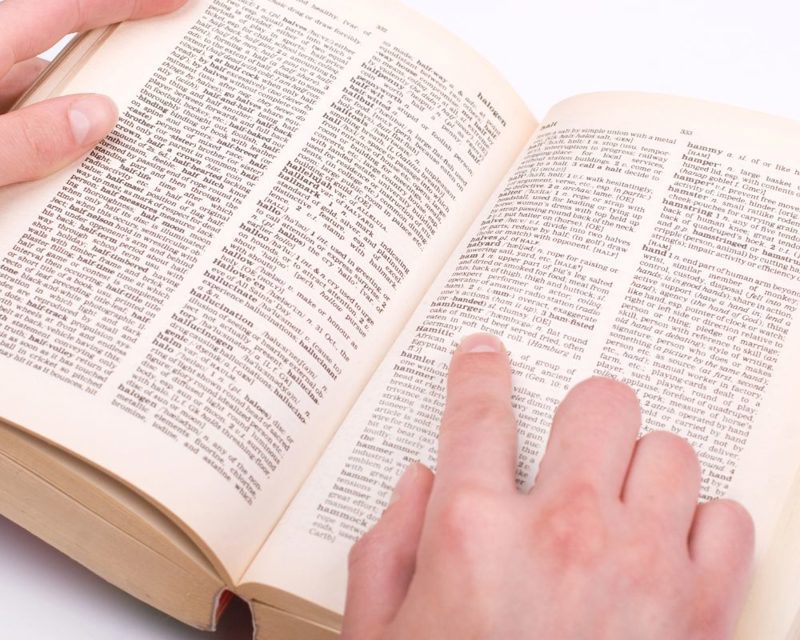
Adding a word to the dictionary is not an easy thing. As Dictionary.com states in their FAQs, a word generally needs to meet four criteria before it can be included. These are that the term has relatively widespread use, has a consistent meaning, seems like it's going to be around for a long time, and is useful for a general audience. Moreover, the senior editor of the website - Nick Norlen - recently stated that when a word is added, it's "a documentation of its use in the real world." So, the fact that several hundred words were added a few weeks ago signifies just how many new terms have recently become common in the English language.
Spellings and definitions are also sometimes updated over time
New words aren't the only things that change about the dictionary. Spellings and definitions also get updated from time to time, with over 1,100 of the latter revised a few weeks ago. This is generally to reflect the way that words with existing definitions are sometimes used in a new context, thus giving them a new meaning. As for spelling changes, these are less common, but one that was implemented recently was the alteration of "anti-Semitism" to "antisemitism. This was done to indicate the "preferred" spelling that many Jewish groups reportedly use. Again, it shows how language can evolve with time, and the dictionary does what it can to reflect that.
Many new words reflect being in the digital age

An interesting element of the many new words that have joined the dictionary in 2023 is how many of them revolve around the internet. "Digital nomad" and "petfluencer" are two terms that were recently added, and they both reflect some of the norms of life in 2023. The former is defined as someone "who works remotely while traveling for leisure," while the latter is about people who gain a large following online because of pet-related content. In a time when many people are on social media and spend much of their days online, it makes sense that these terms are being used so regularly.
When a word is put in the dictionary, it's a sign that it's become mainstream. So, the fact that so many have been added recently just shows how quickly the English language changes nowadays. With how creative the younger generations are with their vocabulary, we expect things won't slow down in this regard anytime soon.
You May Also Like
 Society
Stories of Choosing a Different Kind of Success
 Careers
The Unexpected Joy of Career Reinvention
 Society
How People Found Community After Moving Abroad