Paradoxes That Might Just Blow Your Mind

Love a good head scratcher? If so, you're probably a fan of paradoxes. These are typically statements that result in contradictions that can't be logically accurate. You'll likely have encountered some in the past and may well have devoted your time to trying to find their solutions. Unfortunately, these are not a puzzle that can be so easily solved.
Thankfully, as confusing as paradoxes can be, they're also quite fun to think about and see how others interpret them. You never know when someone might come at a paradox from a new perspective. However, the chances are that a solution will still remain out of reach, no matter how hard you or anyone else tries.
Visual paradoxes also exist, such as the Penrose Triangle and the Blivet
Not all paradoxes are made up of words. Some of them are visual, and you've probably seen quite a few in the past. The Penrose Triangle is one popular example, and the Penrose Stairs is another. There's also the Impossible Cube and the Blivet. Each of these things is possible to draw and can be quite easy to create once you get the hang of it. However, while they might all be 3D shapes on paper, trying to make them into a 3D model should be impossible. The reason that these are paradoxes is because of the way they defy reality outside of a two-dimensional space.
The Liar Paradox causes immense confusion with just four words
All it takes to create a paradox is just four words - "this sentence is false." The Liar Paradox might seem simple on the surface, but when you think about it, it really starts to mess with your head. After all, if the sentence is true, then what it declares must be the truth. Therefore, the sentence is false. However, if the sentence is false, then that means it can't be true. So, the statement that "the sentence is false" is consequently false, meaning the sentence is true. The Card Paradox is effectively an extension of this, where statement A claims that statement B is false, while B attests that A is true. However, this isn't possible because you end up going around in circles.
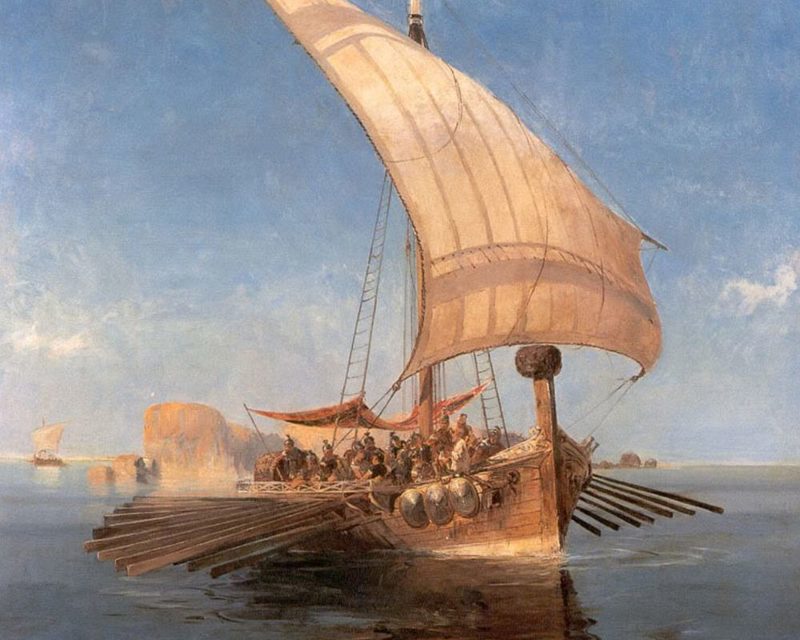
The Ship of Theseus Paradox poses a big question about identity
One paradox that has attracted a lot of attention recently is the Ship of Theseus Paradox. It presents a situation where the nature of identity is called into question. Essentially, if each piece of this ship was replaced once it started to rot, would it still be the same ship once all of the parts had been replaced, or would it be something completely new? What if the original pieces were all then reassembled - would this become the Ship of Theseus? Would the other version stay as the Ship of Theseus, despite no longer retaining the original parts? The fact that the changes all happen gradually makes this quite the thought experiment.
The Dichotomy Paradox takes a simple act and makes it incredibly confusing
The act of going for a walk isn't that confusing. However, the Dichotomy Paradox soon changes that. That's because this paradox states that in order to walk from A to B, you have to walk half of the distance first. However, to do this, you need to walk a quarter of the journey beforehand. To do that, you have to cover an eighth of the distance, and so on. Essentially, the paradox states that for every task, there's an infinite number of smaller tasks to do first to complete it. However, if that's the case, it shouldn't be possible to ever complete the main goal. Suddenly, walking somewhere feels like way too much effort.
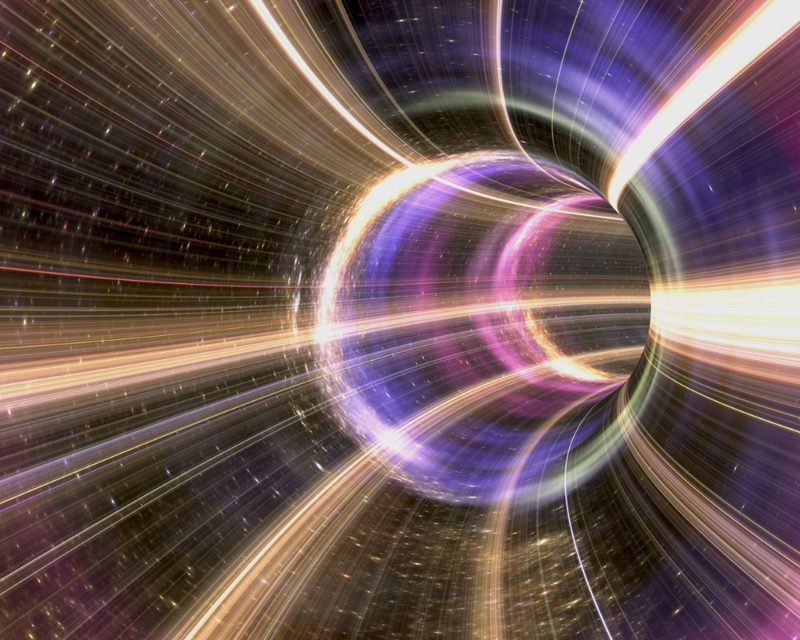
The Grandfather Paradox poses an issue common in science fiction
Plenty of books, TV shows, and films deal with time travel. However, this sort of thing can be risky to create a story around, given the potential for paradoxes. In this media, people are often told to be careful about visiting the past because their actions could lead to them never being born. Of course, if they stopped themselves from being born, how would they have been able to return to the past to cause this in the first place? It's referred to as the Grandfather Paradox because the example used often revolves around ending the life of a person's own grandfather. It really makes us appreciate the fact that time travel doesn't exist.
We apologize if all this talk of paradoxes has left you with a headache. Trying to get your brain around just one of these can be hard work, let alone several. At least they're interesting to think about.
You May Also Like
 Society
Stories of Choosing a Different Kind of Success
 Careers
The Unexpected Joy of Career Reinvention
 Society
How People Found Community After Moving Abroad